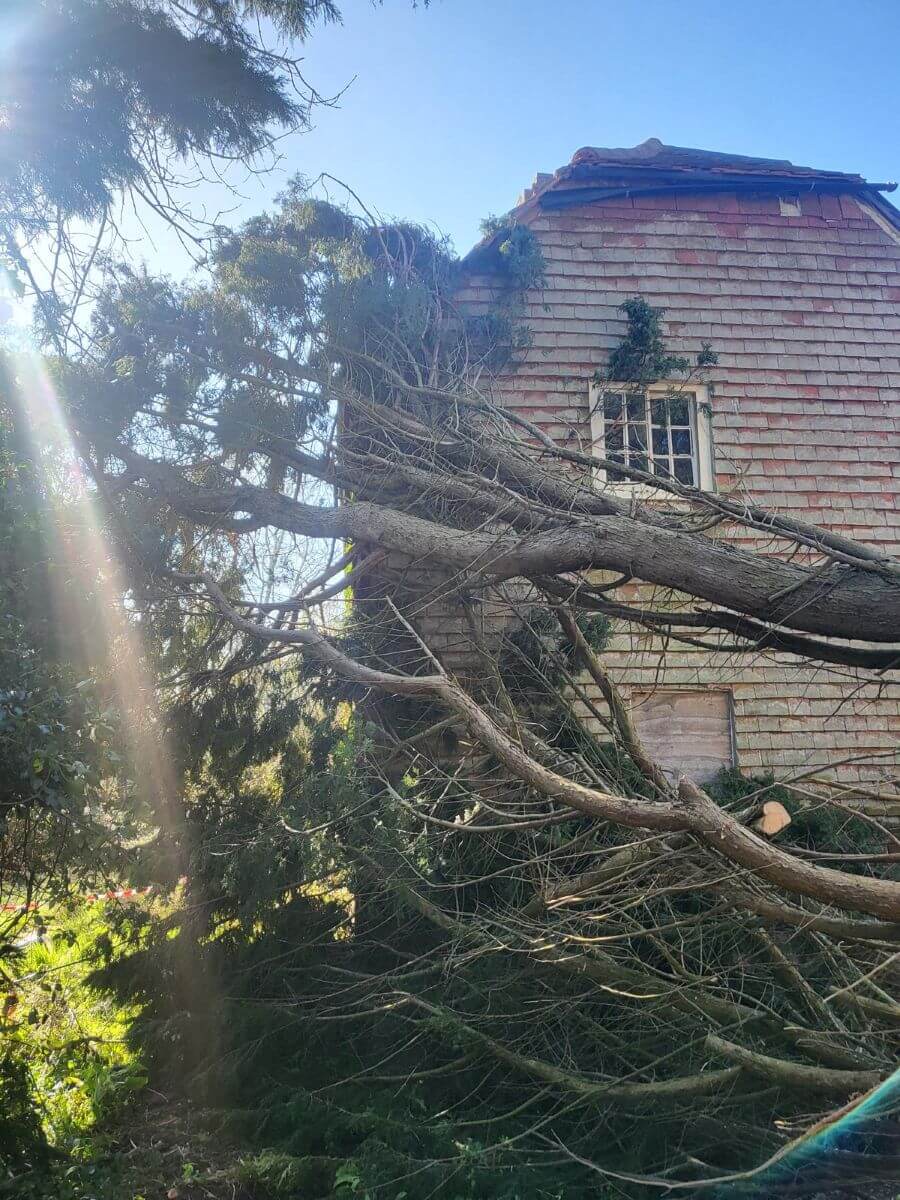
High winds and winter storms can turn a perfectly normal-looking tree into a fallen hazard in a matter of minutes. One moment your garden feels safe, the next there’s a tree across the lawn, driveway or even resting against your roof.
In that moment it’s easy to panic – but a clear plan makes the situation much easier to handle. This checklist walks you through exactly what to do if a tree falls in your garden in Sussex, step by step.
First: Stay Safe and Stay Calm
Safety comes before tidying up or calling anyone out.
- Keep people and pets away from the fallen tree and surrounding area. Branches can still move or roll, and the ground may be unstable.
- Don’t climb onto the trunk or branches, even if it looks solid. Storm-damaged wood can snap unexpectedly.
- Do not touch anything near power lines or cables. If a tree has brought down lines or is resting on them, treat it as a serious emergency and keep well back.
Once everyone is out of harm’s way, you can start working through the practical steps.
Step-by-Step Checklist for Fallen Trees in Your Garden
-
Check for Immediate Dangers
Look carefully, without getting too close:
- Are power or phone lines down, tangled or under tension?
- Has the tree damaged the roof, windows, conservatory or outbuildings?
- Is it blocking a road, pavement or essential access (e.g. for emergency vehicles)?
If there is any threat to life or serious risk to the public, call 999 straight away and explain the situation.
If power lines are involved but no one is in immediate danger, contact your electricity provider’s emergency number and keep a safe distance until they say it’s safe.
Where there are no live cables involved but the tree is unstable or blocking access, an emergency tree surgeon is your next call.
-
Keep the Area Cordoned Off
Once you’ve checked for serious dangers, think about curious children, neighbours and passers-by.
- Move cars away from the area if it’s safe to do so.
- Keep children, pets and anyone not involved well clear.
- Use whatever you have to hand – cones, wheelie bins, garden furniture, hazard tape – to create a clear visual barrier.
The aim isn’t to make it look pretty; it’s simply to stop anyone wandering into a dangerous situation.
-
Take Photos and Short Videos
Before anything is moved, record what’s happened. This will help both your insurer and the tree surgeon.
- Take wide shots showing where the tree has fallen in relation to the house, fences, sheds, cars and boundaries.
- Take close-ups of:
- Damage to roofs, fences, walls or glass
- The base of the tree and roots
- Any cracked or hanging limbs
- A short video walking around the tree (from a safe distance) can be very useful.
You don’t need to capture every angle perfectly – clear, well-lit images are more useful than risky close-ups.
-
Contact Your Home Insurance Provider
Most insurers expect you to notify them promptly after storm damage.
They’ll usually want to know:
- The time and date the tree came down (or when you discovered it)
- What’s been damaged – roofs, fences, sheds, outbuildings, vehicles, neighbouring property
- Whether anyone is injured (if so, emergency services should already be involved)
- Whether you have any previous tree reports or surveys, if applicable
Your insurer may:
- Ask for photos and videos (which you’ve already taken)
- Confirm whether they’ll cover removal and repair costs
- Tell you if they have preferred contractors or whether you can instruct your own tree surgeon
If the site is unsafe, they will usually expect you to arrange emergency make-safe work as soon as possible.
-
Call an Emergency Tree Surgeon in Sussex
Once insurers are aware, it’s time to bring in professionals to deal with the tree itself.
Speed matters because:
- A hanging or partially fallen tree can move further in the next gust of wind
- Extra rainfall can soften the ground and worsen root movement
- Blocked driveways, paths and access points can cause further disruption
When you contact Garnham Tree Surgery’s 24/7 emergency team, it helps to have:
- Your location and access details (front or rear garden, narrow side gate, steps, etc.)
- Any known power lines or public roads nearby
- A rough idea of the tree’s size and species (e.g. large oak, medium conifer) if you know it
- The photos and video you’ve already taken – you can send these via WhatsApp for a quicker assessment
With this information, the team can plan the right equipment, crew size and approach before they arrive.
-
Don’t Attempt Major DIY Clearance
It’s tempting to “just cut a few bits off” to get things moving, but storm-damaged trees behave very differently from normal garden prunings.
- Branches and trunks can be under extreme tension – cutting the wrong piece can cause them to spring, roll or snap violently.
- Using a chainsaw without proper training and PPE is one of the most dangerous DIY activities you can do.
- Climbing onto a fallen tree, especially near fences or roofs, can cause further damage and injury.
Safe DIY should be limited to very small twigs and leaf debris well away from the main trunk and large limbs – and only if the tree is clearly stable. Leave anything heavy, awkward or elevated to qualified arborists.
-
Plan What Happens Next
Once the immediate danger is dealt with and the main stem and large branches are removed, there are usually a few follow-up jobs to consider:
- Temporary weather protection if a roof, fence or shed has been damaged – tarpaulins, boarding or temporary fencing.
- Fence or wall repairs once the tree debris is cleared.
- Deciding whether to grind out the stump or leave it as a feature.
- Checking nearby trees for less obvious storm damage – hanging branches, cracks or movement that could cause problems in the next storm.
A good tree surgeon will talk you through these options on site and help you prioritise what needs doing now and what can wait.
Who Pays When a Tree Falls? (Neighbours, Councils and Insurance)
Money questions often appear as soon as the sawdust settles. Every case is slightly different, and this article isn’t legal advice, but there are some general principles.
- If a healthy tree falls in a genuine storm, insurers will often treat it as an “Act of God”. Your own buildings or contents policy may cover damage to your property and, sometimes, the cost of removal.
- If a tree was clearly neglected or clearly unsafe for a long time, and the owner ignored warnings, insurers may decide they were responsible. That can affect whose policy pays and whether claims are accepted.
- If a council-owned tree or a tree from neighbouring land falls into your garden, your insurer may still be your first port of call. They may then liaise with the other party or pursue costs if appropriate.
Because every policy and situation is different, the safest approach is to:
- Speak to your own insurer first
- Keep a record of all conversations, emails and photos
- Take independent legal advice if the situation becomes complex
A professional tree surgeon can provide reports and photographs to support any claim where needed.
How Our Emergency Storm-Damage Service Works in Sussex
Garnham Tree Surgery provides 24/7 emergency call-outs for storm-damaged and fallen trees across East, West and Mid Sussex, including areas such as Uckfield, Haywards Heath, Crowborough, Burgess Hill, Brighton & Hove, Eastbourne and the surrounding villages.
A typical emergency visit works like this:
Make the site safe first
- Assess immediate risks and priorities
- Secure the area and plan safe access
Liaise with other services if needed
- Work around power lines only once the network operator confirms it’s safe
- Coordinate with councils where public roads or footpaths are affected
Sectional dismantling and removal
- Carefully cut and lower branches and trunk sections
- Use ropes, rigging and, if required, access equipment to avoid further damage
Clear-up and waste removal
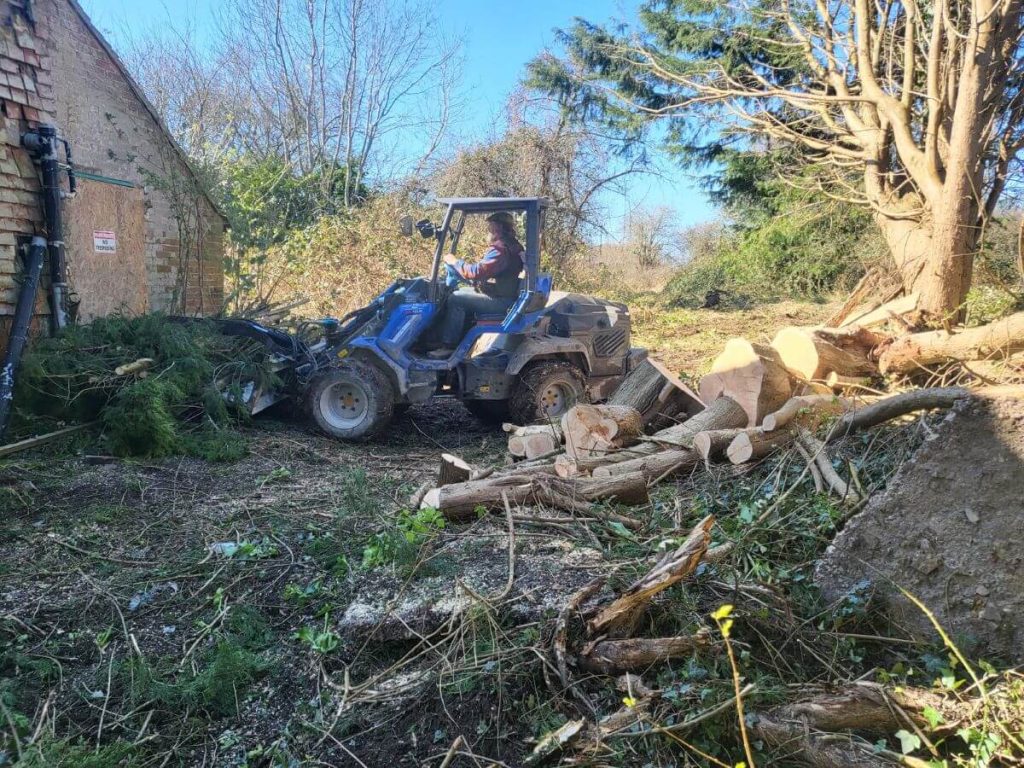
- Remove debris, branches and logs
- Leave the area tidy, with waste taken away or left for you as logs/chippings if requested
Advice on next steps
- Discuss any follow-up work or checks on other trees
- Provide documentation for insurers if required
Tree down after last night’s storm?
Call us now for emergency tree clearance anywhere in East, West and Mid Sussex, or send us photos on WhatsApp for rapid advice from an NPTC-qualified tree surgeon.
How to Reduce Storm Damage Risk Before the Next Big Wind
Every fallen tree is stressful, but it also highlights something important: most storm damage risks can be reduced ahead of time.
Regular checks and maintenance make a big difference:
- Pruning and deadwood removal reduce weight and remove weak limbs that are likely to snap in high winds.
- Crown thinning and reduction help the wind move through the canopy rather than treating the tree like a solid sail.
- Checking older, larger trees near houses, roads, driveways and neighbour boundaries can pick up early warning signs of decay or structural weakness.
- Looking for the signs in our other article – “Is That Tree in Your Garden Dangerous? 7 Warning Signs Sussex Homeowners Shouldn’t Ignore” – helps you spot issues before the next storm arrives.
A planned inspection and some targeted pruning is almost always cheaper and less disruptive than a middle-of-the-night emergency call-out after a major failure.
If you’ve got big trees close to your home, book a pre-storm safety check so you’re not dealing with a 3am emergency later.
We offer free tree inspections across Sussex and can give you clear, honest advice on what really needs doing – and what can safely be left alone.
With the right plan in place, Sussex storms become something you’re prepared for, not something you fear every time the wind picks up.