Trees are natural air filters, quietly working to cleanse our environment. They absorb pollutants, produce oxygen, and contribute to a healthier planet so perfect addition to our gardens. In cities, where traffic and industry pump out harmful emissions, trees act as a frontline defence, reducing toxins in the air.
Quick Fact: A mature tree can absorb up to 48 pounds of CO₂ per year and generate enough oxygen for two people daily!
This article explores how trees improve air quality, the best eco-friendly tree care practices, and how you can contribute to cleaner air and a greener future.
How Trees Naturally Improve Air Quality
Trees as Natural Air Filters
Trees don’t just beautify landscapes, they actively purify the air. Their leaves and bark capture airborne pollutants, reducing the amount we breathe in.
They absorb gases such as:
- Carbon dioxide (CO₂) – Helps combat climate change.
- Nitrogen dioxide (NO₂) – Common in vehicle emissions, a contributor to respiratory illnesses.
- Sulphur dioxide (SO₂) – A by-product of industrial activity that can cause acid rain.
- Ozone (O₃) – Harmful at ground level, where it contributes to smog.
- Additionally, tree canopies trap particulate matter (PM2.5 & PM10)—tiny airborne particles linked to asthma and lung disease.
Oxygen Production & CO₂ Absorption
Through photosynthesis, trees take in CO₂ and release oxygen. This process helps stabilize atmospheric carbon levels while providing fresh air.
Urban Cooling & Pollution Reduction
Urban areas often suffer from the heat island effect, where concrete and asphalt trap heat, raising temperatures. Trees help counteract this by:
- Providing shade, which cools streets and buildings.
- Reducing pollutant levels by limiting vehicle emissions.
- Increasing humidity, which binds airborne dust particles, reducing air pollution.
In the UK, tree-planting initiatives in cities like London and Manchester have significantly improved air quality, leading to a measurable drop in nitrogen dioxide levels.

Mulch helps trees by keeping moisture in the soil for the root system
Best Eco-Friendly Tree Care Practices
Sustainable Tree Maintenance
Healthy trees filter air more efficiently. To support their longevity:
- Use organic fertilizers – Avoid synthetic chemicals that harm soil microbes.
- Apply mulch – Helps retain moisture, suppress weeds, and protect roots.
- Aerate the soil – Allows roots to access oxygen and essential nutrients.
Pruning for Better Air Filtration
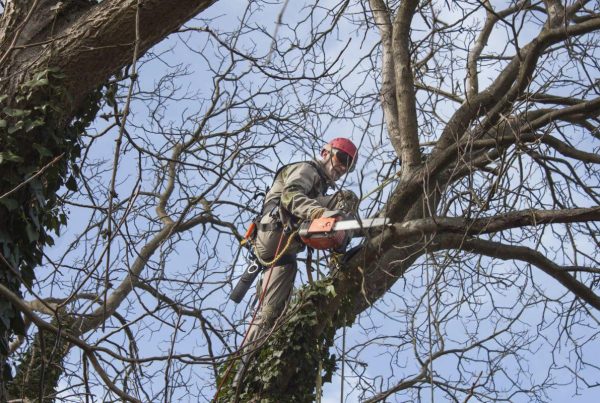
Regular pruning doesn’t just enhance a tree’s appearance, it improves airflow through the canopy, allowing the tree to process pollutants more effectively.
- Remove dead or diseased branches to prevent decay.
- Thin dense canopies to improve light penetration and air circulation.
- Shape trees seasonally to promote strong, sustainable growth.
UK-Specific Native Trees for Air Purification
Some trees are particularly effective at improving air quality. If you’re planting trees in the UK, consider native species that thrive in the local climate:
- Silver Birch (Betula pendula) – Highly effective at capturing particulate matter, making it a great choice for urban areas.
- Scots Pine (Pinus sylvestris) – Absorbs large amounts of nitrogen oxides and filters pollutants year-round.
- Field Maple (Acer campestre) – A strong CO₂ absorber that also supports wildlife.
- Hornbeam (Carpinus betulus) – Helps filter pollutants while providing dense urban greenery.
- English Oak (Quercus robur) – A powerful carbon sink, excellent for large open spaces.
These trees not only purify the air but also support biodiversity, creating habitats for insects, birds, and other wildlife.
Trees & Environmental Sustainability
How Trees Help Combat Climate Change
Trees are among the most effective carbon sinks, absorbing and storing CO₂ while reducing the planet’s overall temperature. Protecting and planting trees can:
- Lower global warming risks.
- Reduce extreme weather events.
- Prevent biodiversity loss caused by deforestation.
Urban Green Spaces & Public Health
Cities with well-maintained trees enjoy lower asthma rates, improved mental well-being, and enhanced air quality. Many UK towns and cities are investing in urban forestry programs to plant more trees and reduce pollution.
Example: London’s “Urban Greening Programme” has helped reduce nitrogen dioxide levels by up to 20% in high-traffic areas.
How You Can Contribute to Cleaner Air with Tree Care
Planting Trees in Your Community
If you have space in your garden or neighbourhood, planting a tree is one of the simplest yet most effective actions for the environment.
- Choose native trees for optimal air filtration.
- Plant during the best season (autumn or early spring).
- Ensure proper watering & aftercare to promote healthy growth.
Supporting Conservation Efforts
Aside from planting trees, you can make a difference by:
- Volunteering with tree-planting organizations.
- Advocating for green policies in local councils.
- Supporting businesses that promote sustainable forestry.
In the UK, groups like The Woodland Trust, Trees for Cities, and The Tree Council actively work to increase urban tree cover and protect ancient woodlands.
Conclusion: A Greener Future Starts with Trees
Trees are essential to life, purifying the air, reducing pollution, and protecting the planet. By caring for existing trees and planting new ones, we can all contribute to a cleaner, healthier environment.
Want to make a difference? Contact Garnham Tree Surgery for expert tree care, planting, and sustainable maintenance services!